Advanced Email Workflows & Automation
Build advanced email workflows for sales, support, and management. Automate sequences, maintain consistency, and scale personalization.
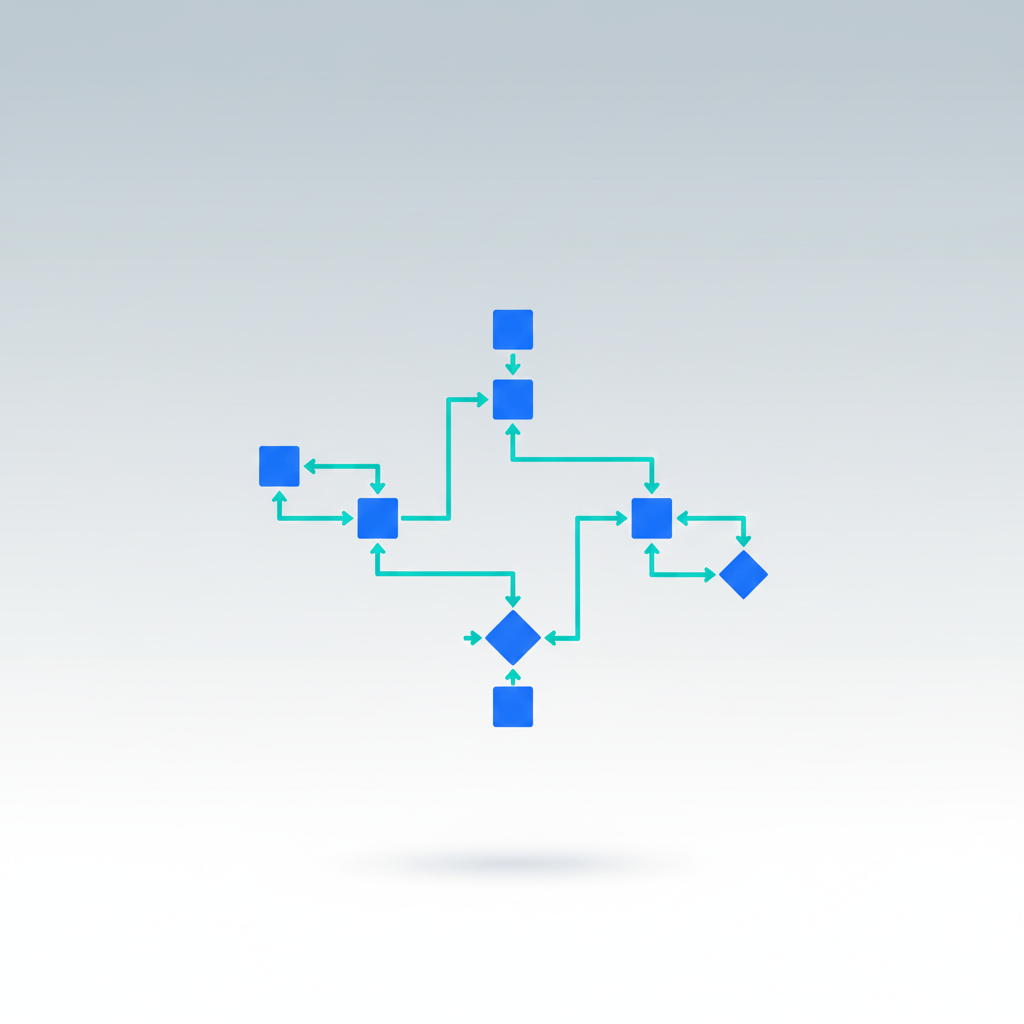
Individual emails are one thing. But professionals don't send emails in isolation. They execute sequences, campaigns, and ongoing communication rhythms. A sales prospecting sequence. A customer onboarding journey. A follow-up cadence.
These multi-step workflows are where email gets hard, and where AI automation pays off the most.
Why workflows matter
Without workflows:
- Send email, remember to follow up (maybe forget)
- Write each follow-up from scratch
- Inconsistent timing and approach
With workflows:
- Automatic reminders for follow-up
- Next email generated with context from previous
- No prospects fall through cracks
Workflow type 1: Follow-up sequence
The structure
Day 0: Initial Email
↓
Day 2: Check for response → If no response:
↓
Day 2: Follow-Up 1 (new angle)
↓
Day 5: Check → If no response:
↓
Day 5: Follow-Up 2 (add value)
↓
Day 10: Final touch
Profile variations
Each stage has different goals:
- Initial: Confident, personalized, value proposition
- Follow-up 1: Gentle reminder, additional value
- Follow-up 2: Different angle, share case study
- Final: Understanding, leave door open
Time savings
Manual follow-ups for 50 prospects: 8-13 hours/month Automated workflow: ~2 hours/month + setup
Workflow type 2: Customer onboarding
30-day sequence
Day 0: Welcome email (expectations, resources) Day 3: Getting started (first steps, tutorials) Day 7: Check-in (address obstacles, quick wins) Day 14: Deepening engagement (advanced features) Day 21: Relationship building (feedback request) Day 30: Review & next steps
AI personalization
Instead of:
"Hi [NAME], here are tips for getting started."
AI generates:
"Hi Sarah, I noticed you've completed initial setup and imported your first dataset. Based on what you've uploaded, here are three reports you'll find useful..."
This gets even better when the AI knows your writing style. Tools with passive style learning — where the AI picks up your greetings, sign-offs, and sentence patterns automatically from the threads you read — mean onboarding sequences don't just sound personalized to the recipient. They sound like you wrote each one.
Workflow type 3: Sales prospecting
Multi-channel sequence
Pre-sequence: Research phase (AI researches prospect) Day 0: Personalized introduction email Day 2: LinkedIn connection request Day 4: Case study email Day 7: Different angle email Day 10: LinkedIn engagement Day 14: Final touch
Subject line variation
Rotate and test:
- "[Company]'s growth + a quick idea"
- "Question about [recent_event]"
- "How [Similar_Company] solved this"
Workflow type 4: Support resolution
Structure
Ticket received → Initial response (within 1 hour) ↓ Investigation ↓ Resolution email (step-by-step) ↓ Day +1: Follow-up check ↓ Day +3: Satisfaction survey
Knowledge base integration
AI pulls relevant KB articles automatically, so responses stay consistent and accurate. Pair this with style learning and your support team's responses read like they came from a senior agent, not a template.
Building workflows
Step 1: Map the journey
- What triggers this workflow?
- What's the desired end state?
- What steps happen between?
Step 2: Define triggers
- Time-based: "48 hours after last contact"
- Action-based: "When email opened"
- Event-based: "When meeting completed"
If you use Google Workspace, you can set up these triggers natively with Workspace Studio — it connects to Calendar, Gmail, Forms, and Sheets to automatically generate drafts without manual intervention.
Step 3: Create profile variations
| Step | Profile | Tone |
|---|---|---|
| Initial | Cold-Outreach | Confident |
| Follow-Up 1 | Warm-Reminder | Helpful |
| Follow-Up 2 | Value-Add | Consultative |
| Final | Break-Up | Understanding |
Step 4: Build decision logic
After Step X:
  IF response received → Exit
  IF no response → Next step
  IF negative response → Different path
Optimization tactics
- Subject line testing: Track open rates
- Timing optimization: Test send times
- Content variation: Test long vs. short
- Segmentation: Different workflows for different audiences
Real results
Sales workflows:
- 40% increase in response rates
- 3x more prospects contacted
- 50% reduction in dropped follow-ups
Support workflows:
- 30% reduction in response time
- 20% improvement in CSAT
- 25% more tickets handled
Key takeaways
- Workflows turn single emails into complete systems
- Common types: follow-up, onboarding, prospecting, support
- Build step by step: map journey, define triggers, create profiles
- Optimize continuously
- Integration with CRM maximizes impact
- For high-volume industries like logistics and freight, workflows handle shipment updates, carrier confirmations, and rate quotes at scale
Ready to compare tools? Read next: AI Email Tools Comparison
Frequently asked questions
How complex should my workflows be? Start simple. A 3-4 step sequence is easier to build, test, and optimize than a complex branching workflow. Add complexity only when needed.
What's the ideal number of follow-ups? For sales: 4-6 touches over 2-3 weeks is standard. For support: 2-3 follow-ups until resolution confirmed. Test what works for your audience.
How do I know when to exit a sequence? Define clear exit criteria: response received, meeting booked, explicit decline, or maximum attempts reached.
Can workflows handle exceptions? Yes, with proper design. Build in decision points for common exceptions and have manual override options for unusual situations.
How do I measure workflow ROI? Track: time saved per sequence, response rates, conversion rates, and quality metrics. Compare to baseline before workflows.
About the Author

Related Articles
Gmail Search Operators Cheatsheet (40+ Filters, Copy-Paste Ready)
The complete Gmail search operator reference: find large attachments, old emails, unread threads, and anything else in seconds. 40+ copy-paste filters for 2026.
How to Delete Large Gmail Attachments (Free Up GBs in 5 Minutes)
Gmail attachments over 10MB are eating your storage. Use these copy-paste search filters to find and delete large Gmail attachments in under 5 minutes.
Why Is My Gmail Storage Full? (It's Shared With Drive and Photos)
Confused why Gmail says storage is full when your inbox looks small? Your 15GB quota is shared across Gmail, Drive, and Photos. Here's how to see what's actually using it.